Primer: Fixed Income

Fixed income (FI) is a cornerstone of traditionally balanced investment portfolios, offering stable
income, varying liquidity, and a relatively low risk profile. Given the prevalence and diversity of FI
investment opportunities, families who wish to create or expand an impact investment portfolio
may find FI to be a good place to start.

Families are making FI impact investments across sectors, geographies, and return profiles.
The purpose of this primer is to explore the different ways families make FI impact investments in
order to achieve their impact and financial objectives. This primer is intended to be explanatory,
and not a source of investment advice.
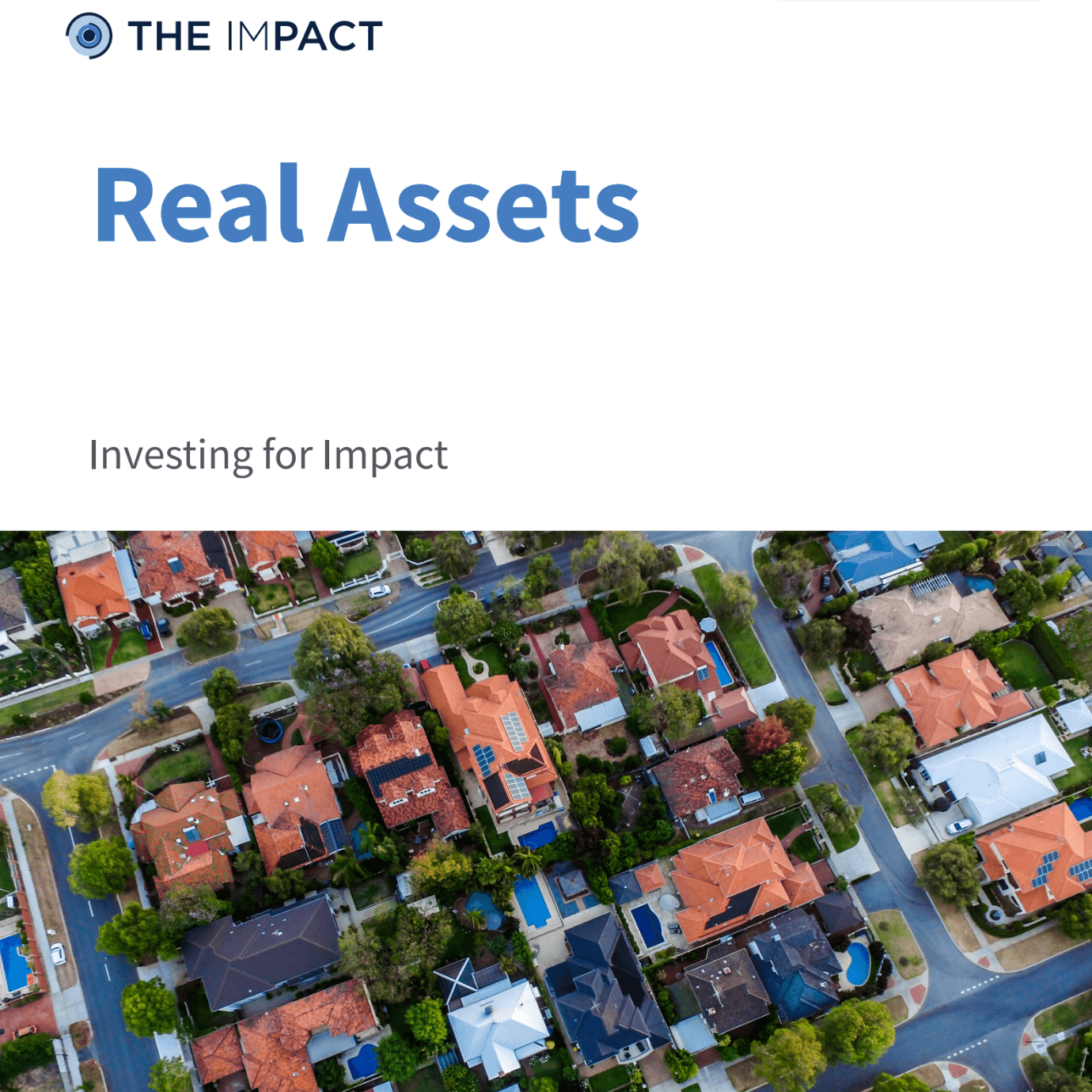

Primer: Real Assets

Real assets can create a tangible, enduring impact. By investing in affordable housing, green
buildings, and sustainable land management, families can generate positive, physical change in
communities they care about most.

Several ImPact member families are using assets they already own, such as family farms or real
estate companies, to create measurable social and environmental impact. Other families are
making new impact investments in real assets as part of their general asset allocation. Real asset
investments are particularly well-suited for investors whose impact objectives include supporting
underserved communities, enhancing resource efficiency, or improving sustainable food and fiber
systems.

The purpose of this primer is to explore various real asset impact investing strategies families use to achieve their overall impact and financial objectives. This document is intended to be exploratory
and not a source of investment advice.
Miami 2025: ImPact Strategy Summit Key Takeaways

The ImPact Strategy Summit 2025 gathered participants from around the globe to discuss operationalizing impact, focusing on aligning capital, influence, and imagination for a just and regenerative future, and exploring systems thinking, community building, and crisis response.

The event featured various sessions on topics like the future of cities, impact investing fundamentals, wealth management, climate change, and democratic systems, emphasizing collaboration, intergenerational well-being, and strategic action. Participants engaged in discussions, panels, and workshops aimed at discerning individual and collective responsibilities in addressing global challenges.

Primer: Early Stage Investments

Early-stage impact investments can be a powerful tool for scaling businesses that are designed to
make money and have measurable social impact. Though investments in mission-driven startups
are risky, they can generate extraordinary financial returns while enabling innovative businesses
to address critical social and environmental problems.

Early-stage impact investing can help preserve a family’s sense of collective purpose and cultivate
entrepreneurial spirit across multiple generations. The tangibility, excitement, and mission clarity
of early-stage impact investments often appeal to younger family members and can help engage
them in the management of family assets.

The purpose of this primer is to explore the different early-stage impact investing strategies families use to achieve their overall impact and financial objectives. This document is intended to be explanatory and not a source of investment advice.
Primer: Cross-Border Impact Investments

Many of The ImPact’s member families are inspired by the opportunity to invest for impact in emerging markets. Investments in these markets have extraordinary potential to create social and environmental impact. These opportunities also present new and sometimes complex legal considerations. The goal of this primer is to provide families with a summary of the important issues and an outline of the key questions to ask their local and international counsel when making international impact investments.

This primer contains two parts: Part one explores the critical role that local counsel plays in appropriately assessing, structuring, and managing investments. It also explains how an understanding of local legal systems and cultures can facilitate better managed transactions. Part two of the primer outlines the questions families should discuss with their local counsel before entering into an international investment agreement.

By no means does this primer exhaust all the potential legal issues that may arise within cross-border impact investments. Rather, it is intended to be a tool for families to use as they conduct their due diligence and engage local legal counsel. This primer is the product of a partnership between The ImPact and New York University Law School’s International Transactions Clinic. The authors of this primer are Monica Hernandez and Claire Bang, advised by Professor Deborah Burand.

Primer: Public Equity

Public equity is a core component of a diversified investment portfolio. Public equity investments
may offer liquidity, dividend income, and/or appreciation in value. For decades, asset owners have
worked to align their public equity investments with their values. Today, many investors in public
equity consider social and environmental issues in their investment selection processes. Given the
diversity and demonstrable track records of these strategies, families may find public equity to be
an accessible asset class as they develop impact investment portfolios.

Families can make public equity impact investments in several ways. First, they can screen their
portfolios according to ethical or environmental, social, and governance (ESG) criteria. Second,
they can invest in specific public companies whose products or services directly address social and
environmental challenges. Third, they can engage in shareholder activism to encourage companies
in which they are invested to improve ESG practices.

The purpose of this primer is to explore the different public equity impact investment strategies
that families use to achieve their overall impact and financial objectives. This document is intended
to be explanatory, and not a source of investment advice.
Greater New York Area 2024: ImPact Leaders Forum Key Takeaways

The ImPact Leaders Forum 2024 brought together families from around the world to discuss reconnection, resilience, and regeneration, focusing on topics like food systems, mental health, and democracy through discussions, presentations, and activities.

Participants explored aligning values with investment strategies, engaged in learning about natural systems, and shared personal stories of impact while also considering the role of policy and advocacy. The event concluded with optional field trips exploring innovative finance for conservation and regenerative food systems.

Oxford 2024: ImPact Strategy Summit Takeaways

The Impact Strategy Summit 2024 in Oxford focused on “Operationalizing Impact,” featuring 85 members exploring impact investing fundamentals and frontiers across 15 sessions. Key topics included Doughnut Economics, multidimensional poverty, impact-first due diligence, and redesigning wealth management systems for impact. The summit also included optional workshops on Innovative Finance and a “Managers Day” for discussions with European-based fund managers.

Mexico 2023: ImPact Leaders Forum Takeaways

The Leaders Forum 2023 in Mexico City focused on “Impact in a Time of Transition,” gathering community members to discuss challenges and opportunities in creating a fairer economic system. Key themes included family dynamics in impact investing, rooting efforts in Mexico, systems thinking related to climate change, and empowering women in leadership roles within families and philanthropy. The event also explored reimagining philanthropy, building impact portfolios, questioning economic growth, and engaging in arts and culture for social change.

New York 2023: ImPact Strategy Summit Key Takeaways

The ImPact’s 2023 Strategy Summit focused on operationalizing impact investing, addressing challenges families face in implementing their strategies amidst market volatility. Key takeaways included maintaining a long-term view, pursuing impact-first strategies without necessarily accepting concessionary returns, and using a systemic approach by utilizing various tools like philanthropy and advocacy alongside investments. The summit also highlighted the importance of advancing equity, supporting community-driven solutions, and engaging with impact fund managers.