Primer: Gender Lens Investing: Strategies for Families

This piece offers succinct, actionable insights for families interested in investing with a gender lens.
Over a dozen interviews with gender lens investors provided wisdom for this publication about
how and why families use gender as a factor of analysis in their investment decisions. Readers can
use their experiences and stories to understand and seize the diverse opportunities for considering
gender in investment decision-making.

This report offers information for families at all starting points, ranging from families who want to use a gender lens to spot potential opportunities for market outperformance, families who want to use gender as the central focus of their investment thesis, and those who want to blend it into an existing impact strategy.
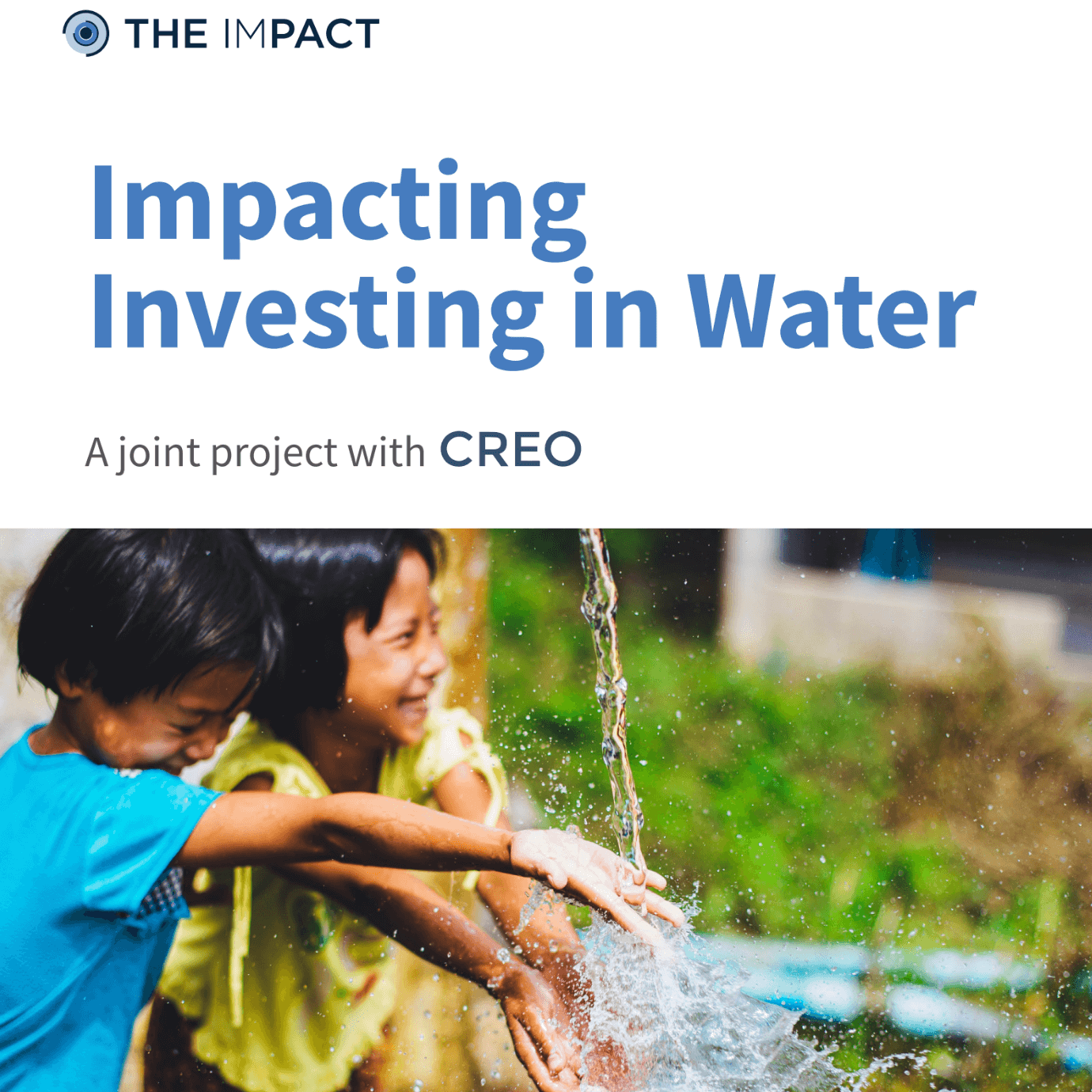
Impacting Investing in Water

Water is a finite natural resource unlike any other. It is required for life itself and sustains almost
every natural and industrial process on the planet. Increasing volatility in water quality and
quantity present evolving risks for the planet and for humanity. Addressing the local and global
challenges that reduced water dependability and declining water quality pose will require trillions
of dollars of new investment. Private capital must play a role in developing, implementing, and
scaling solutions to water problems. The universe of available water investments is still nascent,

creating opportunities for early movers motivated to create impact. Families are uniquely posi-
tioned as catalysts and leaders in the water investments market. Families can deploy solutions-oriented, patient capital across asset classes to deliver impact alongside financial return. This primer maps water investment opportunities and provides several inspiring examples of how families are
actively investing to address local and global water challenges.

This report was a joint project with CREO Syndicate

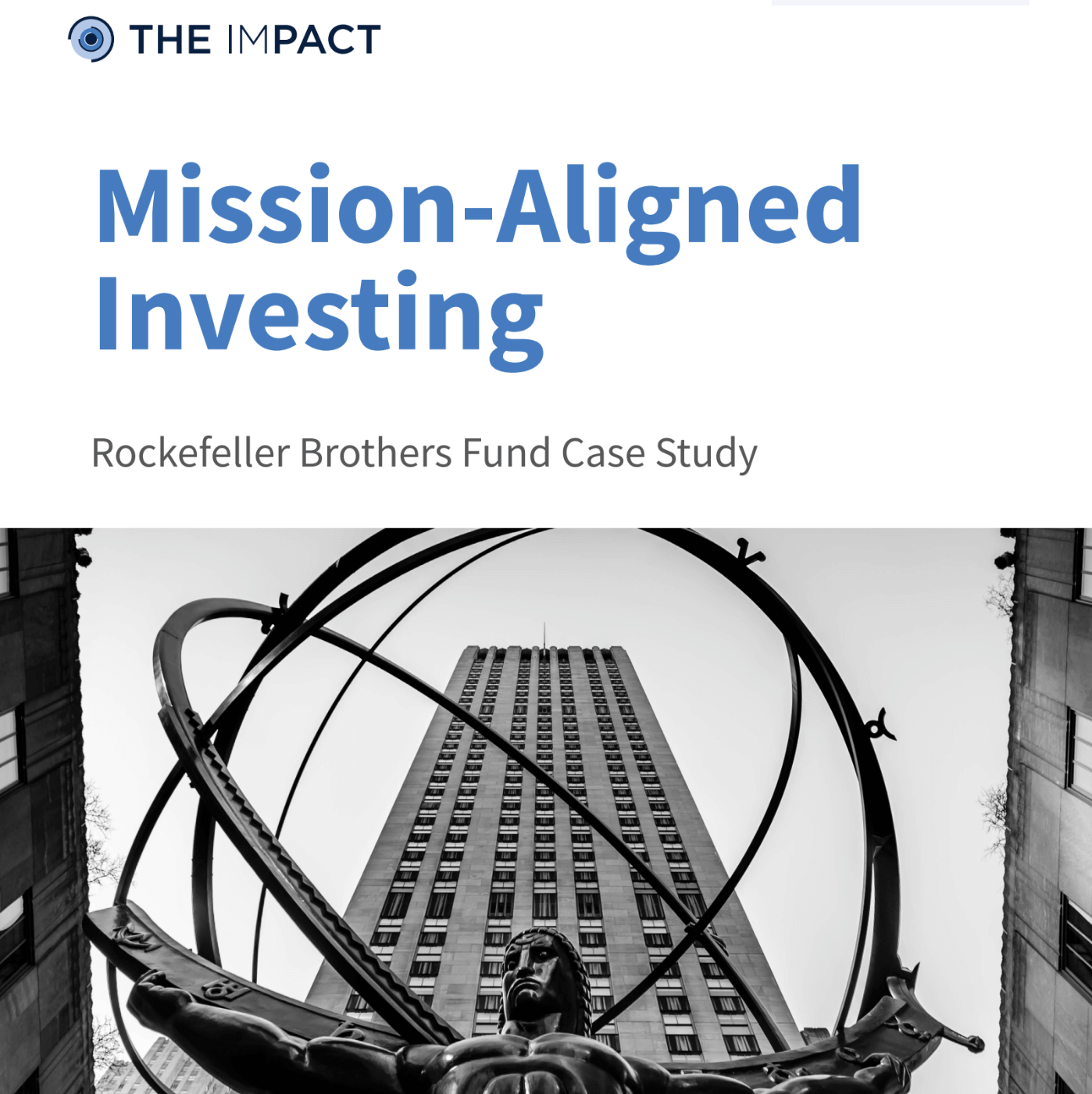
Case Study: Mission-Aligned Investing

This case study explores the Rockefeller Brothers Fund’s mission-aligned and impact investing strategies. Its purpose is to offer actionable insights that families can use as they work to align their investments and their values. While every family is unique, ImPact members have experiences that provide for shared learning.

By understanding the decision points and outcomes of the Rockefeller Brothers Fund case, other families can make more informed decisions as they develop and implement their mission-aligned and impact investing programs.

Understanding Impact Investing for Families

What do people really mean when they talk about “impact investing?” Why do people make
impact investments, and how do they do it? What counts, and what doesn’t?
This primer provides family enterprises* with clear explanations of the “why,” “how,” and
“what” of impact investing. This report will illuminate the diversity of the impact
investing marketplace as it exists today and provide families with a basic understanding of
how they can start making more impact investments more effectively.

Inversión de Impacto

This report provides a framework for families engaging in impact investing, emphasizing aligning investments with values to generate measurable social and environmental returns alongside financial ones. It outlines various approaches across asset classes, sectors, and geographies, proposing a seven-phase process for families to strategize and optimize their impact investment efforts. The report stresses the diversity of opportunities and advocates for strategies tailored to family objectives.

Investimento de Impacto

This report introduces impact investing for families, defining it as aiming for both financial returns and measurable social/environmental impact, and explores various motivations and approaches families take. It outlines a seven-phase framework for families to explore, strategize, and optimize their impact investment efforts across different asset classes, sectors, and geographies, while emphasizing the diversity of opportunities and return profiles within the market. The guide highlights strategies such as “carve out,” “integration,” and “all-in” for implementing impact investing within family enterprises.

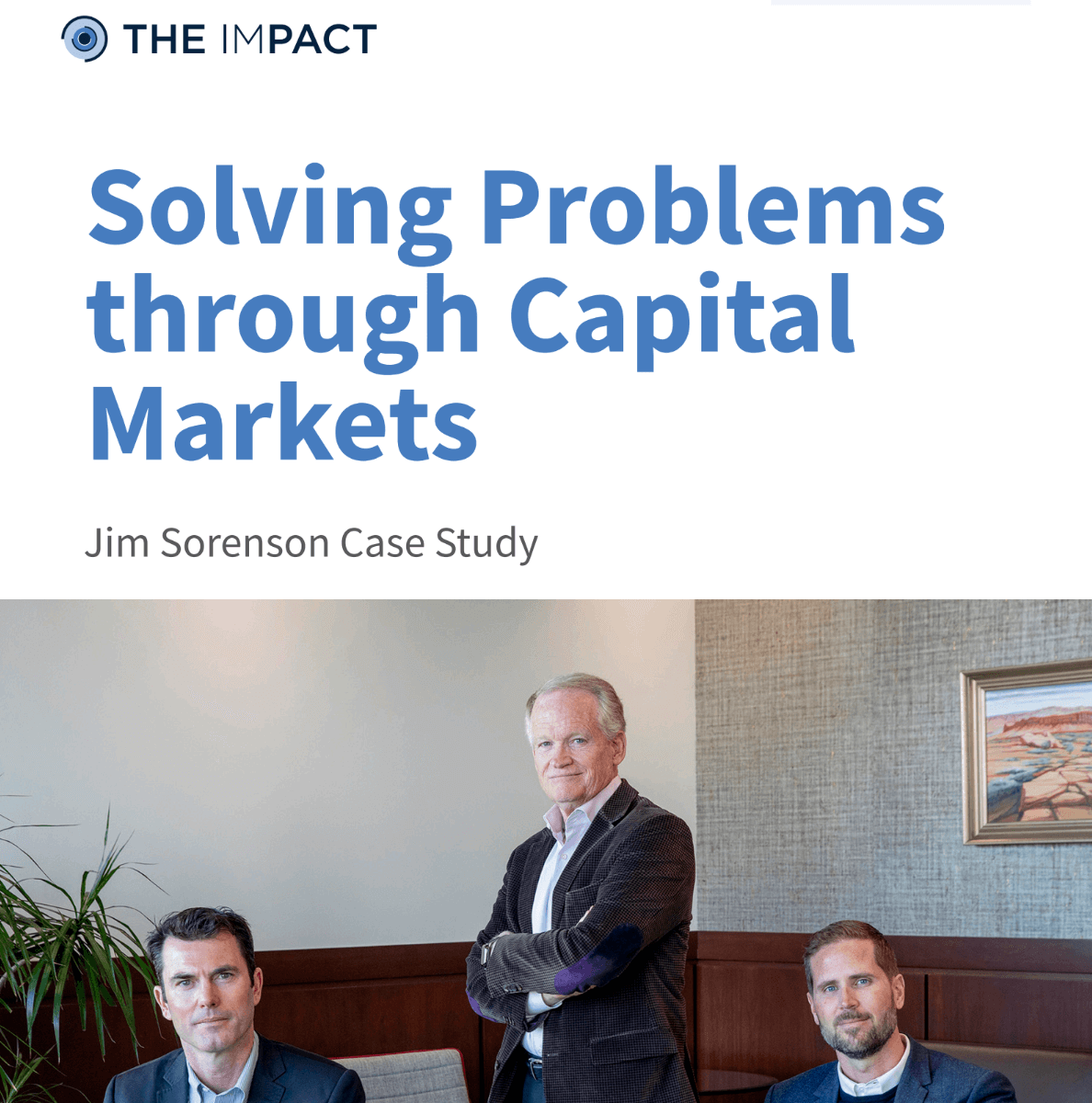
Case Study: Solving Problems through Capital Markets

Jim Sorenson is a successful entrepreneur, business executive, investor, and philanthropist. He
is a pioneer impact investor and plays a leadership role in building the impact investing field
worldwide. Jim believes impact investing is a powerful method for scaling solutions to local and
global challenges, and for creating significant economic value. Jim makes impact investments with
his personal capital, out of the endowments of his foundations (in the form of mission-related

investments), and uses grantmaking capital from his foundations to make program-related investments (or PRIs).

This case study focuses on Jim’s PRIs as they constitute the majority of the impact investments
he makes. Jim uses PRIs as a tool to fill critical market gaps and catalyze financing for scalable
innovations with the potential to improve the livelihoods of poor and marginalized people. While
every family is unique, Jim Sorenson has experiences that can provide for shared learning. Through understanding the decision points and outcomes of Jim Sorenson’s work, other families can make more informed decisions as they develop and implement their own impact investing programs.

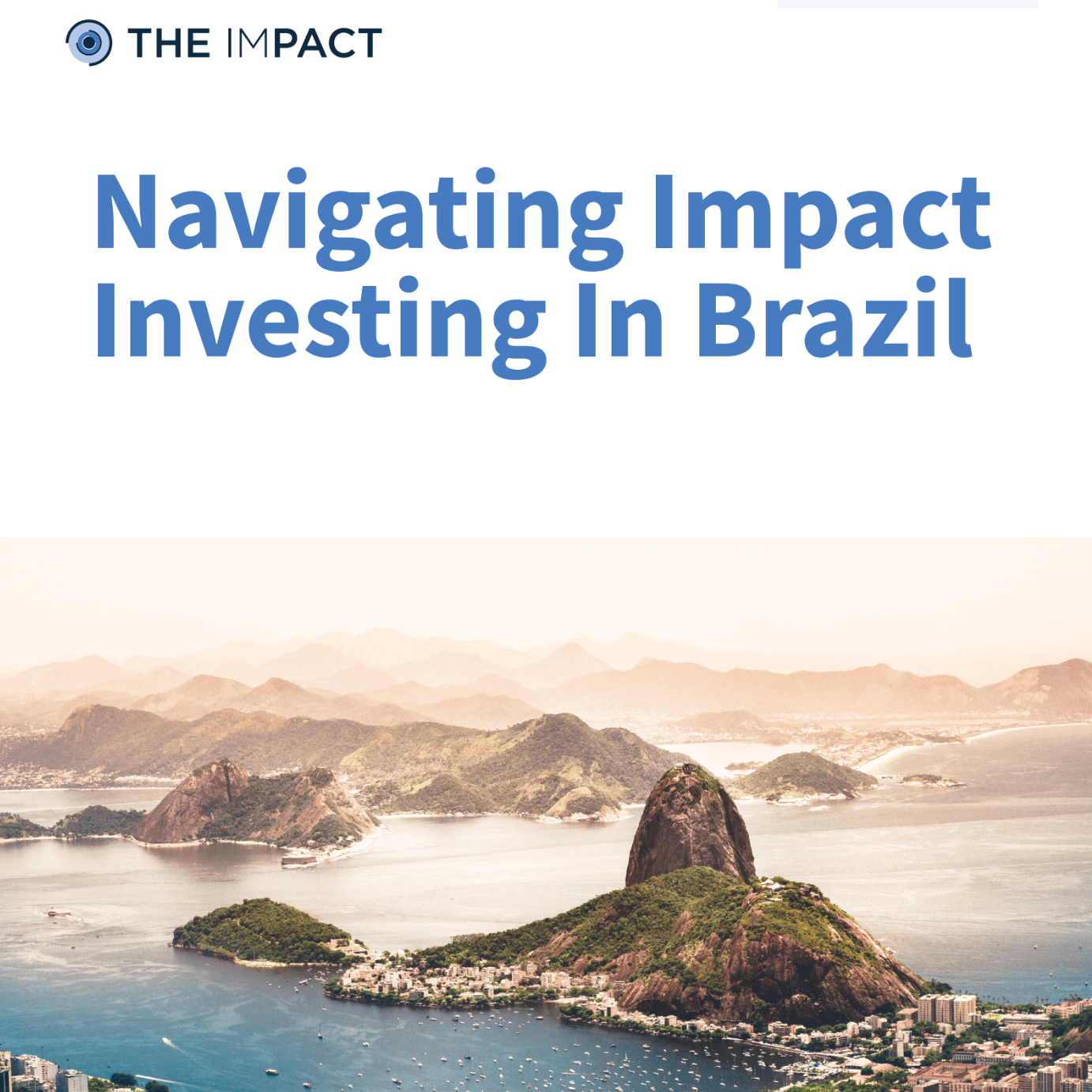
Navigating Impact Investing In Brazil

What does it take to build an impact investing ecosystem in an emerging market?

This report explores how Brazil’s social inequality, environmental urgency, and philanthropic tradition are creating momentum for values-aligned investing. With an expanding middle class and a rising number of family enterprises exploring new financial tools, the report captures the early architecture of Brazil’s impact ecosystem, from mission-driven businesses to collaborative investment funds.

While the opportunity is clear, the report also candidly addresses Brazil’s unique challenges: political and economic volatility, geographic concentration of capital, and a still-developing track record for financial returns. Yet Brazilian families are leading with creativity and conviction, operating impact-focused businesses, seeding funds, supporting social entrepreneurs, and building networks of trust. With deep dives into high-potential sectors like education, healthcare, and environmental preservation, this report provides practical entry points, strategies, and examples for families ready to lead with impact in Brazil.

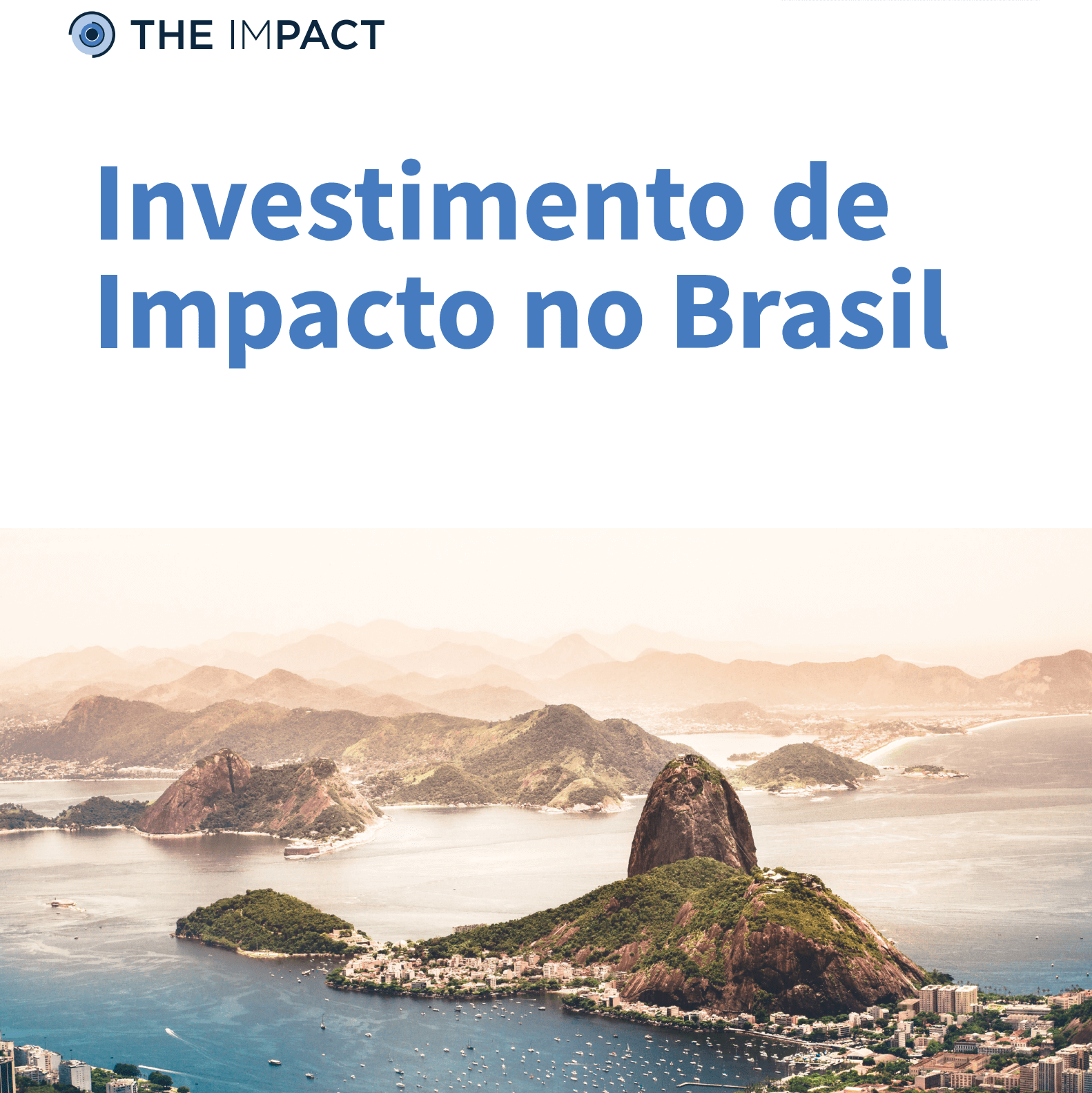
Investimento de Impacto no Brasil

This report explores the impact investing landscape in Brazil, focusing on the role of families in driving this movement. It details the history and current state of impact investing in the country, highlighting opportunities in sectors like education, health, and environmental preservation.

The report also examines the challenges and trends within the market, while showcasing various approaches families are taking through business operations, fund investments, and philanthropic efforts to advance social and environmental good.

Primer: Private Equity

Families can make private equity investments that help generate social and environmental impact
at scale. By investing growth capital in fast-growing, intrinsically impactful businesses or by
improving the social and environmental impact of mature operating businesses, private equity
investors can generate commercial financial returns and address critical global challenges.
The purpose of this primer is to explore various private equity strategies families use to achieve
their overall impact and financial objectives. This document is intended to be explanatory and not
a source of investment advice.